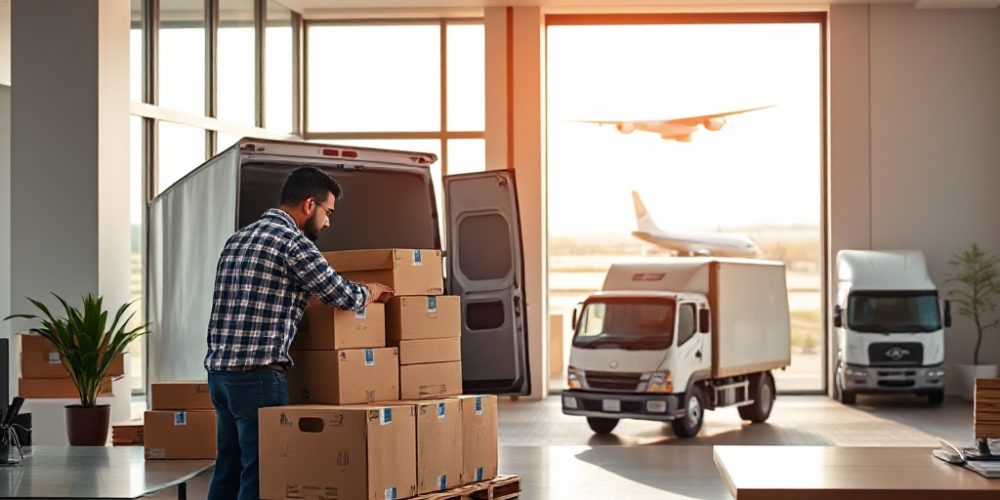
Door-to-Door Air Cargo from Lahore Explained
Imagine standing at your doorstep in Lahore with a stack of sealed cartons, watching a pickup team load them into a van, and then receiving those same boxes at an address in Dubai or London a few days later. That single experience is what door-to-door air cargo promises, and it is the simplest way to understand how air cargo services in lahore actually work. Instead of juggling a local courier, an airline counter and a foreign delivery company, you deal with one provider that owns the whole chain.
This article walks through that chain stage by stage, from the first pickup to the final signature abroad, so you know what happens to your shipment at every handover point.
Why Door-to-Door Changes the Air Cargo Experience
Traditional air freight splits responsibility between several parties. You arrange ground transport to the airport, a freight forwarder books the flight, and someone at the destination clears customs and delivers. Each handover is a chance for delays and miscommunication. Door-to-door service removes those gaps by keeping one coordinator accountable from start to finish.
For families and small businesses in Lahore, this matters most when they have never shipped internationally before. They do not need to learn airline paperwork or find a foreign agent. They need a single point of contact who can answer the question, “Where are my boxes right now?”
What the single-provider model covers
- Pickup from your home, office or warehouse in Lahore
- Packing support and documentation checks before the shipment leaves
- Booking space on a cargo flight and handling the airport handover
- Customs clearance at the destination
- Final delivery to the consignee’s address
The value is not just convenience. A single provider can trace a delay back to its source because it controls every step, which is far harder when three separate companies blame each other.
The Pickup Stage: What Happens at Your Lahore Address
The journey begins long before anything reaches an airport. A pickup team arrives at your address, checks the items against the list you provided, and decides how each piece should be packed for air transit. Air cargo holds are pressurised but subject to vibration and handling, so fragile items need more protection than a standard road move.
This is also when paperwork is verified. The team confirms the consignee’s name, address and contact details, and checks that invoices or declarations match the goods. Errors caught here are cheap to fix; errors discovered at the airport can ground a shipment for days.
Packing decisions that affect the whole shipment
Cartons should be strong enough to survive stacking, and heavy items should sit in separate boxes rather than crushing lighter goods. Liquids need sealing and orientation marks. Anything that could be mistaken for a restricted item should be declared openly so the provider can advise before the boxes leave your home.
Once packed, each carton is weighed and labelled. The weight and dimensions feed directly into the air waybill and the final cost, so this is the moment to ask how chargeable weight is calculated if your shipment is bulky but light.
Airport Handover and the Flight Itself
From your home, the shipment moves to the airport for export processing. The provider lodges the air waybill, presents the goods for screening, and hands them to the airline or its ground handler. This is the stage where international cargo services in Lahore earn their keep, because airport procedures reward preparation and punish improvisation.
Export documentation is checked against the goods, and the shipment is booked onto a specific flight or a series of connecting flights. Direct routes are faster but not always available, so many shipments travel through a hub before reaching their final airport.
What transit time really depends on
Flight duration is only part of the story. Total transit includes the wait for the next available flight, the time spent in transit hubs, and the arrival airport’s processing speed. A shipment can be in the air for six hours and still take three days to arrive if connections and handling slots are tight.
Weather, airline capacity and seasonal demand all influence scheduling. A good provider will give you a realistic window rather than a single optimistic date, and will flag when a route change could affect delivery.
| Stage | What is happening | What you can control |
|---|---|---|
| Pickup and packing | Goods checked, packed and labelled at your address | Accurate item lists and honest declarations |
| Airport handover | Export paperwork lodged, goods screened and handed to airline | Complete documents supplied on time |
| Air transit | Flight and any connections to the destination airport | Little, beyond choosing a realistic service level |
| Destination clearance | Import customs checks and duty assessment | Correct values and consignee cooperation |
| Last-mile delivery | Local transport to the final address | Accurate address and reachable contact |
Customs and Last-Mile Delivery at the Destination
When the flight lands, the shipment enters import customs. The destination agent reviews the documents, may inspect the goods, and calculates any duties or taxes owed. This step is often the least predictable, because foreign customs authorities set their own timelines and may request additional information from the consignee.
A complete and consistent document set is the best defence against clearance delays. Values, descriptions and quantities should match what was declared at pickup, and the consignee should be reachable in case questions arise.
From the airport to the final address
After clearance, the shipment is released for delivery. A local vehicle carries it to the consignee’s door, where someone signs for receipt. Deliveries to apartments, gated communities or business addresses may need an appointment, so sharing a working phone number and any access instructions avoids a failed attempt.
If the consignee cannot be present, agree in advance on an authorised recipient or a safe delivery arrangement. A shipment that clears customs but cannot be delivered still incurs storage and re-delivery costs.
Keeping the Chain Visible and Choosing the Right Provider
The final piece of the door-to-door experience is visibility. You should be able to ask for a status update and get a real answer: picked up, handed to airline, in transit, under clearance, out for delivery. Shipment tracking turns a black box into a timeline you can plan around.
When comparing providers in Lahore, ask how they handle the destination end. Some forwarders hand off to a partner and lose visibility; others maintain their own coordination. Ask what happens if customs requests extra documents, who contacts the consignee, and how charges for storage or re-delivery are handled.
Also confirm what the quoted price includes. Door-to-door quotes should clarify pickup, air freight, destination clearance and final delivery, plus any duties or taxes that remain the consignee’s responsibility.
Done well, door-to-door air cargo feels less like freight forwarding and more like handing your boxes to someone you trust. The pickup team at your Lahore home, the airport handover, the flight, the customs desk and the final delivery are all links in one chain, and a provider that manages every link is what turns a complicated international move into a single, trackable promise.